
Mahseer
Tor spp. (Golden Mahseer: Tor putitora)
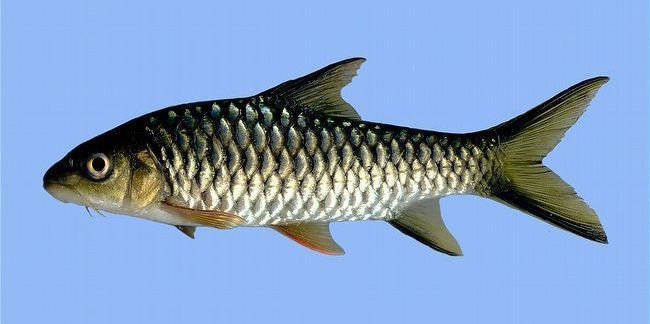
Identification
Mahseer are large cyprinid fishes with an elongated, streamlined body built for fast-flowing rivers, covered in conspicuously large scales with a scaleless head. They have a pointed snout, thick fleshy lips, and two pairs of well-developed barbels. Colouration is dark olive-green on the back, fading to golden or silvery-gold flanks with a silvery-white belly, and reddish-yellow or orange fins. Known as the "tiger of the river," they can grow over 2.5m and 50kg in the wild.
Culture Method
Mahseer aquaculture is less developed than trout or carp farming, cultured mainly for conservation stocking and increasingly for premium markets and angling tourism. Flow-through tanks or raceways mimic their natural riverine habitat. They are slow growers, taking 2–3 years to reach 500–800g. Breeding requires specialized hatchery technology — broodstock are induced to spawn via hormonal injections, with demersal eggs needing continuous water flow to incubate.
Water Quality
| Parameter | Optimal Range | Notes |
| Temperature | 15°C – 25°C | Prefers semi-cold to warm transitional zones |
| Dissolved Oxygen | >7.0 mg/L | Min. 9.0 mg/L for abundant growth |
| pH | 7.0 – 8.5 | Neutral to slightly alkaline |
| Turbidity | Low | Highly sensitive to siltation |
High dissolved oxygen and continuous water flow are non-negotiable — Mahseer are highly intolerant of organic pollution.
Feed
Omnivorous and opportunistic, naturally feeding on aquatic insects, mollusks, crustaceans, small fish, algae, and fallen fruit. In aquaculture, transitioning to artificial diets is challenging — fed high-quality formulated pellets (35–45% protein), balanced with both animal and plant-based ingredients. Due to slow metabolism, feeding must be closely monitored to avoid degrading water quality.
Diseases
- Fungal: Saprolegnia and Achlya bisexualis — common on eggs or injured fish
- Parasitic: Argulosis (fish lice), Lernaeasis (anchor worm)
- Bacterial: Aeromonas and Pseudomonas — linked to poor water quality or handling stress
Economics
Slow growth means a long production cycle that ties up capital, but this is offset by exceptionally high market value as a premium delicacy. Mahseer farming is intrinsically linked to angling tourism — stocking in semi-cold zones and reservoirs (e.g. Hazara, Western Multi-Species Zone) offers dual revenue: high-value fish sales plus eco-tourism income. Commercialization strategy focuses on premium status rather than volume.