
Catla
Catla catla
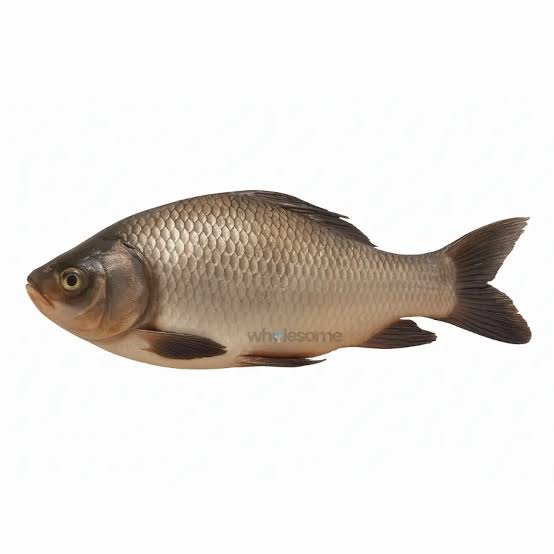
Identification
Catla has a short, deep, laterally compressed body with a conspicuously large head — depth exceeds half the head length. Covered in large cycloid scales with a scaleless head, bluntly rounded snout, and large eyes visible from below. The mouth is wide and upturned with a protruding lower jaw and thick lower lip, lacking an upper lip and barbels. Greyish back and flanks fade to silvery-white on the belly, with dusky fins. It's the fastest-growing Indian Major Carp, reaching 1–1.2kg in its first year.
Culture Method
Catla occupies the surface niche in polyculture pond systems, typically 30–35% of stock in traditional three-species (with Rohu and Mrigal) or 20–30% in two-species systems (with Rohu). It does not breed naturally in ponds — seed relies on induced breeding via pituitary extracts or synthetic hormones. Fry are reared in nursery ponds, then fingerling ponds, before stocking into grow-out ponds at 80–100mm for a roughly one-year grow-out period.
Water Quality
| Parameter | Optimal Range | Notes |
| Temperature | 25°C – 32°C | Intolerant of cold; ceases growth below 14°C |
| Dissolved Oxygen | >5.0 mg/L | Crucial for surface feeders |
| pH | 7.5 – 8.5 | Slightly alkaline preferred |
| Ammonia (NH3) | <0.1 mg/L | High levels stress fish, reduce feeding |
Poor water quality reduces feeding activity and increases disease susceptibility.
Feed
Primarily a planktophagous surface feeder — larval stages feed heavily on zooplankton (rotifers, cladocerans); adults continue preferring zooplankton alongside algal and plant material, using fine gill rakers to strain food. Culture relies on enhancing natural plankton via manures/fertilizers, supplemented with rice bran and oilcake. Floating pelleted feeds work particularly well given its surface-feeding habit.
Diseases
- Parasitic: Argulosis (fish lice), Lernaeasis (anchor worm)
- Bacterial: Dropsy (Aeromonas), Hemorrhagic septicemia
- Fungal: Saprolegniasis — injured fish or sudden temperature drops
Economics
Often commands the highest price among Indian Major Carps due to taste preference and rapid growth (1–2kg within a year). Its surface-niche role in polyculture maximizes overall pond productivity. Costs are driven mainly by pond maintenance, fertilizers, and supplementary feed. Promoting Catla within KP's warm-water carp clusters is a strategic priority for commercialization.