
Pangasius
Pangasianodon hypophthalmus
Identification
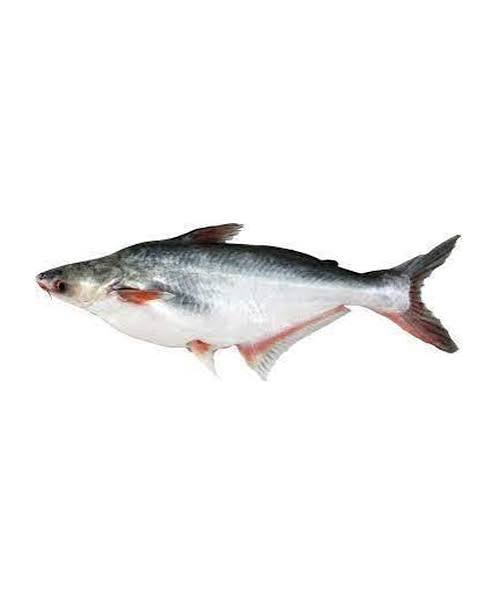
Also known as the Iridescent Shark or Striped Catfish — a large, active freshwater catfish with a long, laterally compressed, scaleless body. Small, flattened head with a broad mouth and two pairs of short barbels; sharp spines on the dorsal and pectoral fins. Juveniles show an iridescent silvery appearance with dark lateral stripes; adults become uniformly grey/olive-green. Obligate air-breathers via a modified swim bladder, allowing survival in oxygen-depleted water.
Culture Method
Globally recognized for ultra-intensive aquaculture in deep earthen ponds or floating river cages. Relies entirely on hatchery propagation via hormone-induced breeding; larvae are highly cannibalistic and need careful grading. Stocked at extraordinarily high densities (40–60 fish/m²) without needing mechanical aeration due to air-breathing capability. Reaches harvest size of 1.0–1.5kg in just 6–8 months.
Water Quality
| Parameter | Optimal Range | Tolerance Limits |
| Temperature | 27°C – 30°C | Highly sensitive to cold; lethal <15°C |
| Dissolved Oxygen | >3.0 mg/L | Can survive near 0 mg/L (air-breathing) |
| pH | 6.5 – 8.5 | Tolerates acidic water down to pH 5.5 |
| Ammonia (NH3) | <0.5 mg/L | Tolerant, but high levels still cause stress |
Massive feed inputs cause rapid organic waste buildup — regular water exchange or biofloc technology is needed.
Feed
Omnivorous with a voracious appetite, naturally consuming fish, crustaceans, plant matter, and detritus. Fed formulated floating pellets composed primarily of plant-based proteins (soybean meal, rice bran, cassava) — protein requirement is relatively low (25–30%). Floating pellets let farmers observe feeding behavior and adjust rations, reducing waste and pollution.
Diseases
- Bacterial: Bacillary Necrosis of Pangasius (BNP) — major mortality threat; Motile Aeromonas Septicemia
- Parasitic: Ichthyophthirius multifiliis (Ich), monogenean flukes (Thaparocleidus spp.)
- Fungal: Secondary infections on wounds/lesions
Economics
One of the most economically successful global aquaculture species — high-volume, low-margin production. Extreme stocking density without aeration plus cheap plant-based feeds keep production costs per kilogram very low, while the mild white fillet is globally traded. Introducing Pangasius to KP's warm-water zones (D.I. Khan, Bannu) offers strong scale-up potential, provided winter temperature constraints are managed.