Discovering KP’s High-Potential Areas
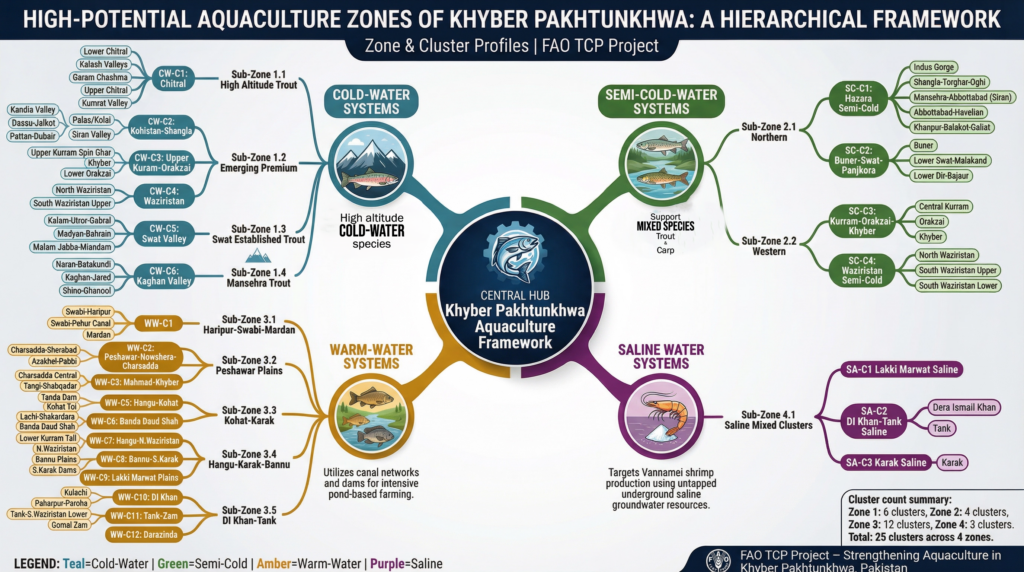
The foundation of our commercialization strategy is a comprehensive spatial mapping exercise. We have identified and categorized the diverse landscapes of Khyber Pakhtunkhwa into four distinct aquaculture zones based on their unique environmental characteristics, water resources, and suitability for specific fish species. Explore the interactive GIS portal below to dive into the data, or read the detailed profiles of each zone to understand the opportunities they present.
Interactive GIS Portal
Interactive Map Placeholder: A robust, interactive map allowing users to explore the four main zones and their respective sub-zones/clusters. Users should be able to toggle layers for hydrology, infrastructure, and environmental factors.
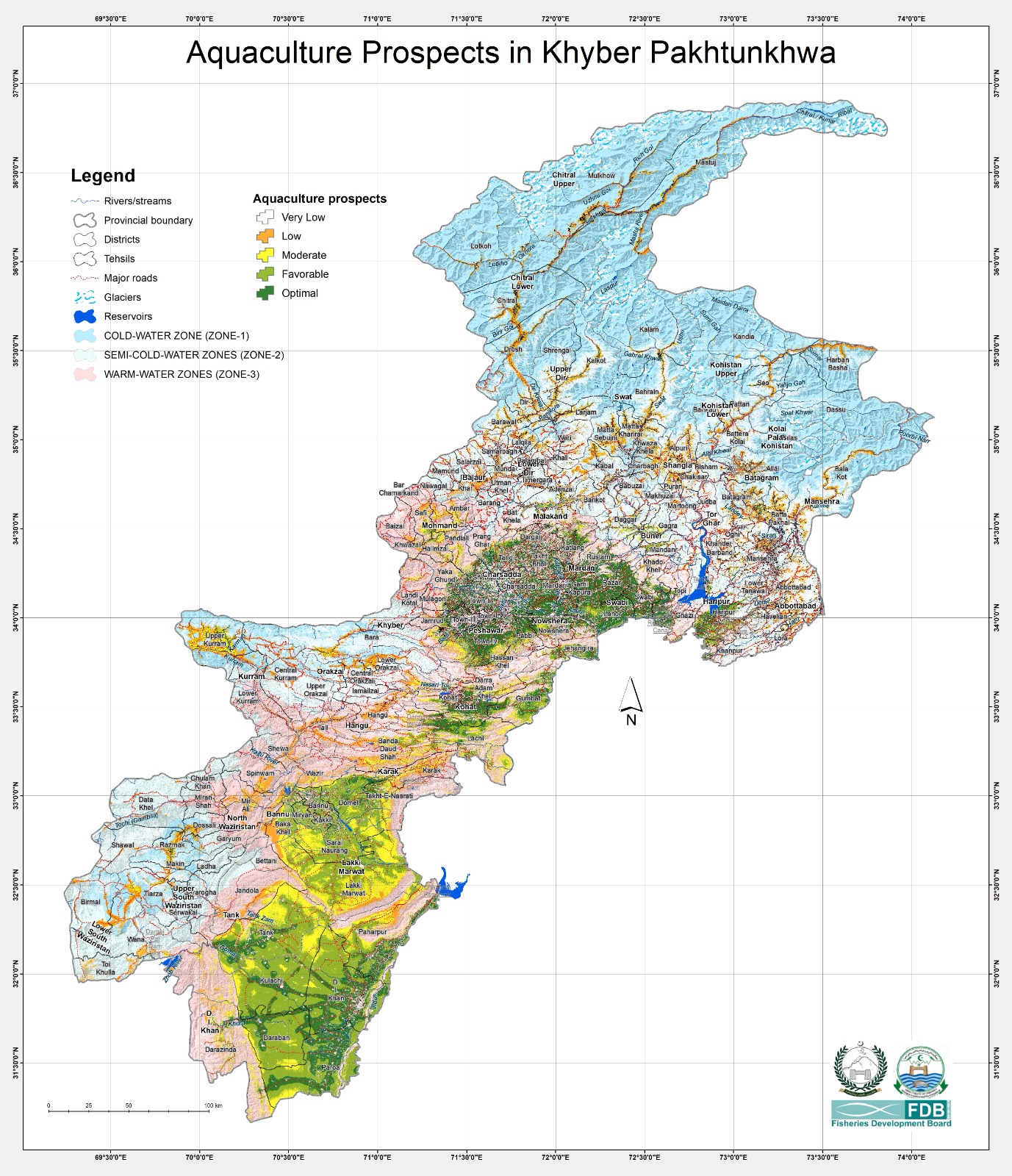
Provincial Overview of Aquaculture Potential
Khyber Pakhtunkhwa possesses one of Pakistan’s most diverse and promising aquaculture landscapes, supported by an exceptional combination of abundant surface and groundwater resources, wide elevation gradients, varied climatic conditions, and extensive river, spring, canal, reservoir, and groundwater systems. The GIS-based suitability assessment, validated through field surveys at 347 locations across 36 districts, demonstrates that the province functions as an integrated aquaculture production zone comprising distinct cold-water, semi-cold-water, warm-water, and inland saline-water environments. These complementary ecological systems collectively support a broad range of high-value aquaculture species, including trout, carp, tilapia, pangasius, mahseer, and shrimp. The provincial aquaculture potential map therefore provides a strategic overview of Khyber Pakhtunkhwa’s complete aquaculture resource base, illustrating how the identified zones and clusters collectively establish a scientifically validated framework for sustainable investment, commercial expansion, climate-resilient production, and long-term sector development.
Zone 1: Cold-Water (Trout) Zone
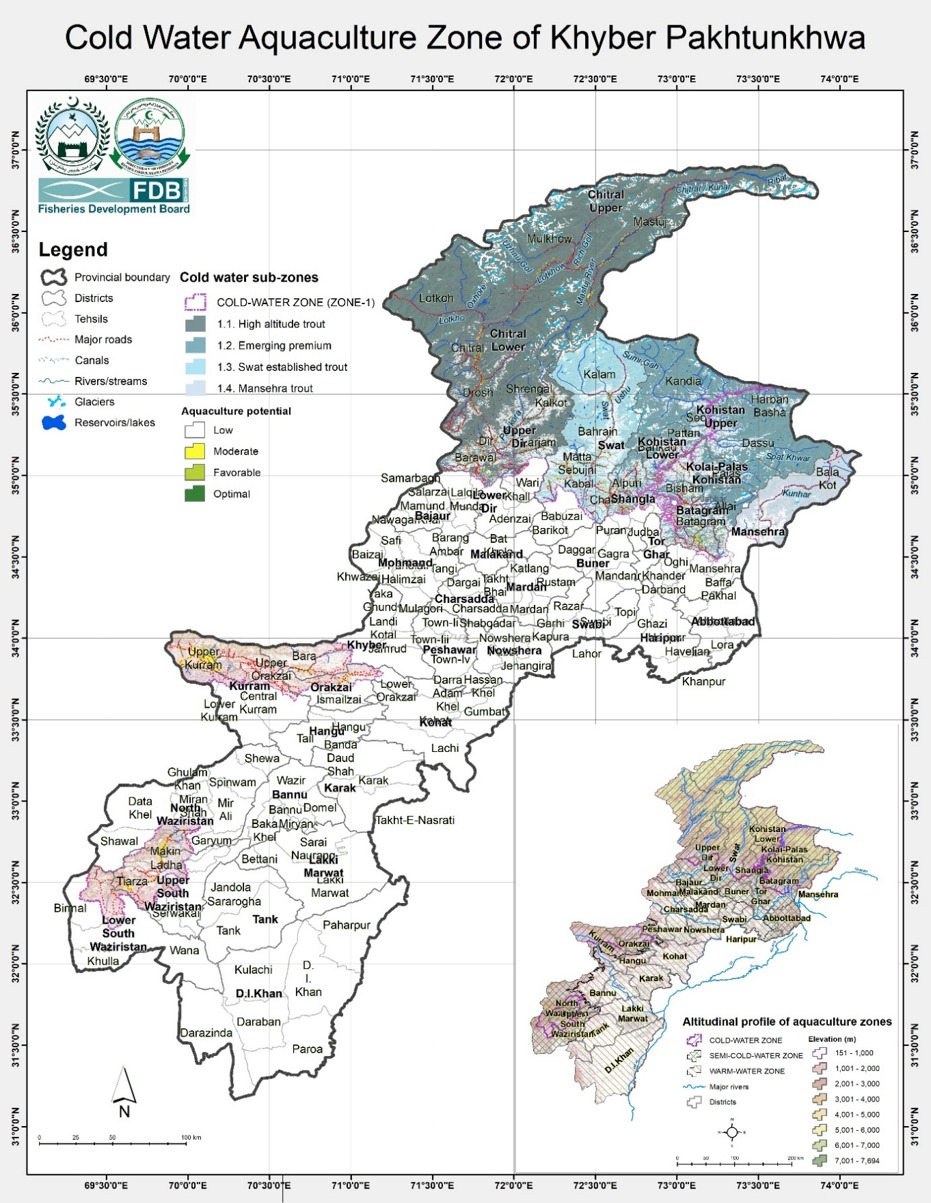
The Cold-Water Zone, characterized by pristine, fast-flowing rivers and low temperatures, is the premier region for trout farming in Pakistan. This zone encompasses the high-altitude valleys of Chitral, Swat, and Kaghan. These areas offer exceptional water quality, ideal for the cultivation of high-value Rainbow and Brown Trout.
While the potential for premium trout production is immense, farmers in this zone face specific challenges, including the need for specialized raceway infrastructure, access to high-protein feed, and vulnerability to seasonal flooding. Our strategy focuses on developing resilient infrastructure, establishing local feed mills, and improving market access to ensure the sustainable growth of this lucrative sector.
Zone 2: Semi-Cold-Water Zones
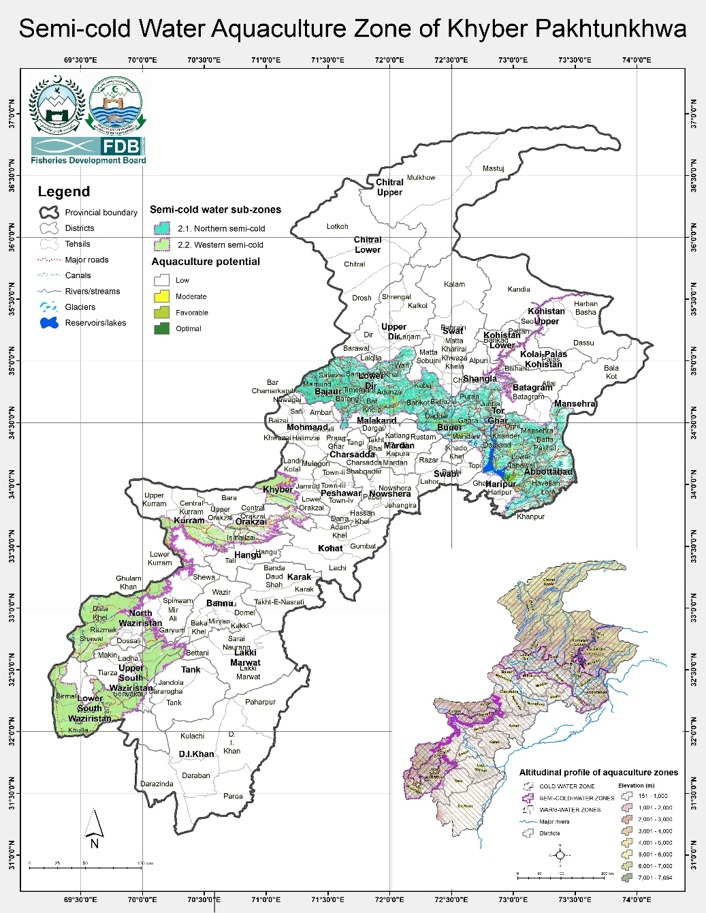
The Semi-Cold-Water Zones act as a transitional area between the high mountains and the warmer plains. This zone includes the Hazara Multi-Species Zone and the Western Multi-Species Zone. The moderate temperatures and diverse water sources in these areas make them suitable for a wider variety of species, offering farmers flexibility in their production models.
This zone is ideal for polyculture systems, where different species can be reared together to maximize resource utilization. The strategy for the Semi-Cold-Water Zones emphasizes the development of adaptable farming techniques, improved seed supply networks, and the promotion of species that thrive in these specific climatic conditions.
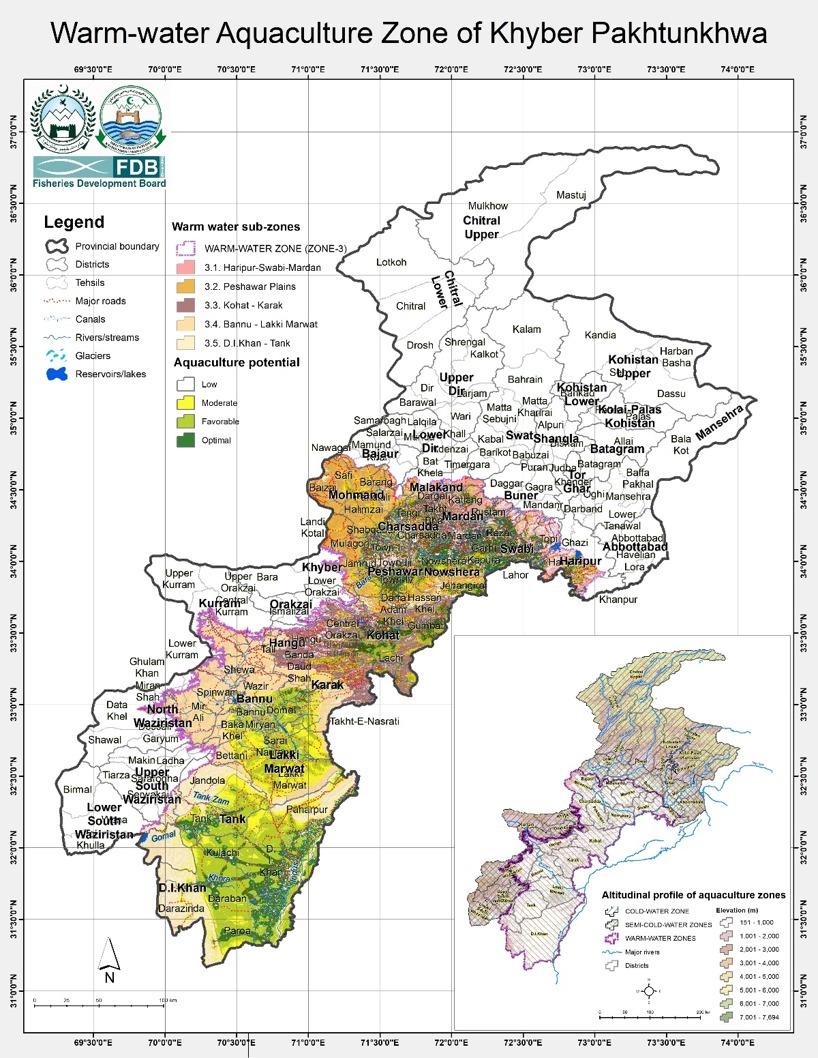
Zone 3: Warm-Water (Carp) Zones
The Warm-Water Zones cover the expansive plains and lower-altitude regions of KP, including the Central Plains, Peshawar Basin, Southern Hills, Bannu Basin, and Gomal Zam irrigated areas. These zones are characterized by higher temperatures and abundant, slow-moving water resources, making them the traditional heartland of carp farming.
Carp farming here is well-established, but there is significant room for modernization and commercialization. Our focus in the Warm-Water Zones is on transitioning from extensive, low-yield practices to semi-intensive and intensive systems. This involves improving pond management, optimizing feed usage, and introducing better disease control measures to significantly increase productivity and profitability.
Zone 4: Saline Water Aquaculture Zone
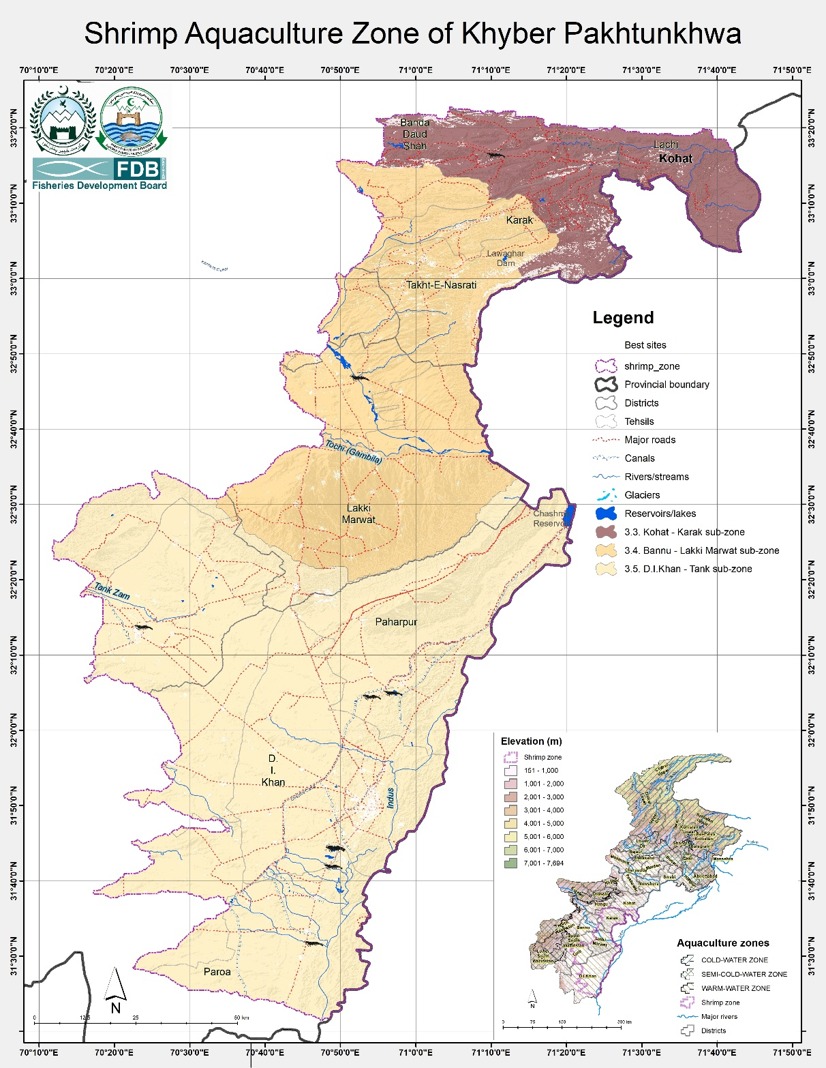
The Saline Water Aquaculture Zone represents a unique and emerging opportunity in KP. This zone encompasses areas with brackish or saline groundwater, which are unsuitable for traditional agriculture but hold potential for specific aquaculture practices.
Developing this zone requires specialized knowledge and targeted investment. Our strategy involves identifying salt-tolerant species, such as certain strains of Tilapia or even pilot shrimp farming projects and developing the necessary infrastructure and expertise to turn these previously marginal lands into productive aquaculture hubs.
Overall High Potential Aquaculture Zones of KP