
Trout
Oncorhynchus mykiss
Identification
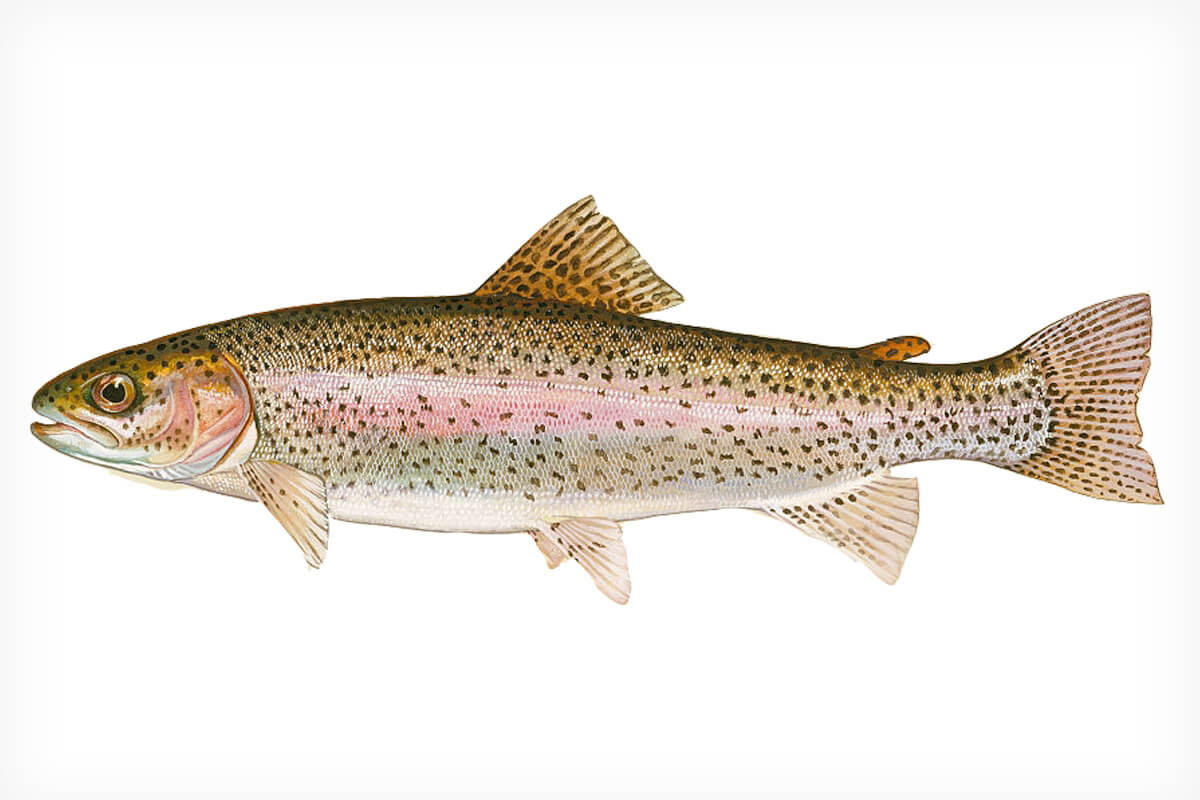
The rainbow trout is characterized by an elongate, fusiform body shape, blue to olive-green on the back with a distinctive pink or red band along the lateral line and a silvery belly. The back, sides, head, and fins are heavily spotted with small black spots, and it possesses an adipose fin usually edged in black. Anadromous strains (steelhead) can grow to 7–10 kg within three years, while freshwater resident strains typically reach around 4.5 kg in the same period.
Culture Method
Rainbow trout farming predominantly uses intensive monoculture in concrete or earthen raceways, flow-through tanks, and circular ponds — well-suited to KP's cold-water zones (Swat Valley, Chitral, Kaghan Valley). Broodstock are artificially spawned; eggs incubate in hatching troughs to the eyed stage, then fry are reared indoors before transfer to outdoor raceways. Marketable size (250–500g) is reached in 9–12 months.
Water Quality
| Parameter | Optimal Range | Critical Limits |
| Temperature | 9°C – 14°C for growth; <21°C overall | >21°C severe stress; >25°C lethal |
| Dissolved Oxygen | 7.0 – 10.0 mg/L | <5.0 mg/L stress & poor feeding |
| pH | 6.5 – 8.5 | <5.5 or >9.0 physiological stress |
| Ammonia (NH3) | <0.02 mg/L | Highly toxic at elevated levels |
| Flow Rate | 1 L/min/kg fish (w/o aeration) | — |
Continuous water exchange is essential to remove metabolic wastes and replenish oxygen.
Feed
Carnivorous, requiring high-protein extruded pelleted feeds (40–50% protein) primarily from fish meal, with fish oil for essential fatty acids. Synthetic pigments are often added to achieve market-desired flesh colour. Feeding must be carefully managed — overfeeding wastes expensive feed and degrades water quality.
Diseases
- Bacterial: Enteric Redmouth Disease, Furunculosis, Vibriosis
- Viral: Viral Hemorrhagic Septicemia (VHS), Infectious Hematopoietic Necrosis (IHN)
- Parasitic: Ichthyophthirius multifiliis (Ich), Costia, external flukes
- Fungal: Saprolegnia species — eggs & injured fish
Economics
Feed is the largest expense (50–60% of production costs) due to high-protein requirements. Demand for premium cold-water fish is strong domestically and for export. Viability depends on feed conversion ratio, minimizing mortality, and reliable markets — value addition (processing, smoking, cold-chain) can significantly boost margins.